


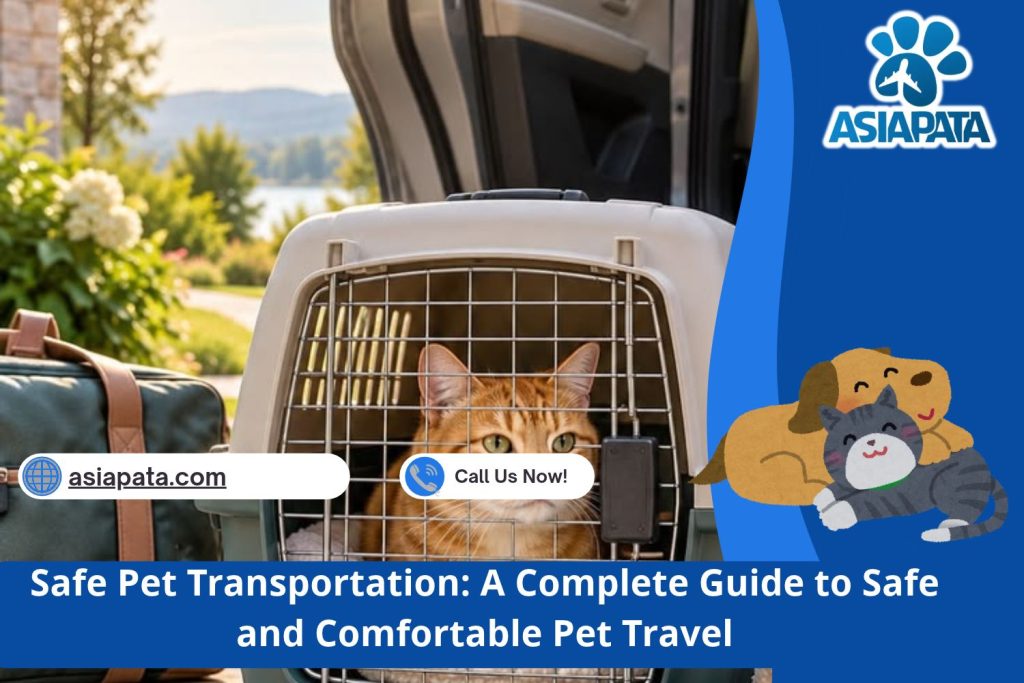

Safe pet transportation is essential for protecting animals during short trips, long-distance journeys, and international travel. Whether you are moving to a new city or relocating to another country, transporting pets requires careful preparation and attention to their health and comfort.
Dogs, cats, and other companion animals may experience stress when traveling in unfamiliar environments. Changes in temperature, noise, movement, and daily routines can affect their well-being. Without proper preparation, these conditions may create unnecessary risks during transportation.
Understanding the correct procedures can help pet owners make informed decisions. From choosing a suitable transportation method to preparing travel documents, every step contributes to a safer journey.
This guide explains how to transport pets safely, prepare for international pet transportation, and choose the right services for your animal.
1. Why Is Safe Pet Transportation Important?
Safe pet transportation involves more than moving an animal from one location to another. It requires appropriate handling, suitable equipment, proper environmental conditions, and compliance with relevant regulations.
Pets cannot explain when they feel uncomfortable or frightened. Therefore, owners and transportation providers must pay close attention to their needs throughout the journey.
Proper transportation helps reduce the risk of injury, excessive stress, dehydration, and temperature-related problems. It also ensures that pets are handled according to their size, age, health condition, and species.
For international journeys, safety is especially important because pets may need to pass through airports, undergo document inspections, and experience several stages of transportation.
Preparing in advance helps prevent avoidable delays and makes the process more manageable for both pets and their owners.

2. Choose the Most Suitable Pet Transportation Method
Choosing the right transportation method is one of the most important steps in safe pet transportation. The best option depends on the distance, destination, animal’s condition, and applicable transportation regulations.
2.1. Air Transportation for Pets
Air transportation is a practical option for long-distance and international pet travel. It can reduce overall travel time compared with many land transportation routes.
Depending on the airline, destination, and animal’s size, pets may be permitted to travel in the cabin, in an approved hold, or through a specialized animal transportation service. Not every airline offers all these options.
Before booking, owners should confirm the airline’s pet policy, carrier requirements, booking procedures, and any restrictions on certain breeds or animal species.
Some airlines may have additional rules for animals with short muzzles, very young pets, or pets with particular health concerns. These factors should be reviewed before selecting a flight.
Owners should also check the conditions at connecting airports if the journey includes transit stops. Transit regulations can differ from the requirements at the final destination.
2.2. Road Transportation for Pets
Road transportation is suitable for many domestic journeys and trips between nearby cities. It offers flexibility in scheduling and may allow planned stops when necessary.
Pets should travel in a secure carrier or an appropriate restraint system. Allowing an animal to move freely inside a moving vehicle can increase the risk of injury and distract the driver.
For longer journeys, plan suitable breaks when the transportation arrangement allows them. These breaks may provide opportunities for hydration, toileting, and checking the animal’s condition.
The vehicle should have adequate ventilation and a comfortable temperature. Never leave a pet unattended in a vehicle when the temperature could become unsafe.
2.3. Professional Pet Transportation Services
Professional pet transportation services can help owners organize complicated journeys. This may be especially useful when transporting animals internationally or when several documents and travel arrangements are required.
Depending on the provider, services may include transportation planning, guidance on documentation, carrier recommendations, and coordination with transportation partners.
Before choosing a provider, ask about animal handling procedures, available routes, communication arrangements, and the specific services included in the quotation.
A reliable provider should explain the process clearly and help owners understand the requirements that apply to their pet’s journey.

3. Prepare Your Pet Before Transportation
Preparation is essential for reducing travel-related stress and improving animal safety. Ideally, owners should begin planning well before the departure date, especially for international journeys.
3.1. Schedule a Veterinary Health Check
A veterinary examination can help determine whether a pet is fit to travel. The veterinarian may assess the animal’s general health and identify concerns that could affect the journey.
Age, pregnancy, existing illnesses, breathing difficulties, and other medical factors may influence whether a particular transportation method is appropriate.
Owners should discuss the expected travel duration and destination with their veterinarian. This helps ensure that preparation is suitable for the individual animal.
3.2. Check Vaccination and Identification Requirements
Vaccination requirements vary depending on the destination and transportation provider. Some countries require specific rabies vaccinations, veterinary certificates, or additional health procedures.
Microchip identification may also be mandatory for certain international routes. The microchip details should match the information in the relevant travel documents.
Do not assume that documents accepted for one country will automatically be accepted by another. Check the official import requirements before making final arrangements.
3.3. Familiarize Your Pet With the Carrier
Pets may feel frightened when placed in an unfamiliar carrier. Introducing the carrier gradually can help them become more comfortable before the journey.
Place the carrier in a familiar environment and allow the animal to explore it at its own pace. When appropriate, use familiar bedding or offer treats to create a positive association.
For pets traveling by air, ensure that the carrier meets the airline’s specifications. A carrier that is suitable for a car journey may not necessarily be approved for air transportation.
3.4. Prepare a Travel Checklist
A checklist helps owners organize the necessary items and documents before departure.
Common preparations include:
- Veterinary records and health certificates.
- Vaccination documents and identification information.
- An approved carrier or travel crate.
- Absorbent bedding, where permitted.
- Food and water supplies for appropriate use during the journey.
- Contact details for the owner and relevant emergency contacts.
- Any additional items recommended by the veterinarian or transportation provider.
The exact checklist should be adjusted to the animal’s needs and the requirements of the destination.
4. Select the Right Pet Carrier for Safe Transportation
A suitable carrier is one of the most important pieces of equipment for safe pet transportation. It helps protect the animal, prevents escape, and provides a defined space during travel.
The carrier should be sturdy, secure, well ventilated, and appropriate for the animal’s size. In general, the pet should have enough room to stand naturally, turn around, and lie down comfortably.
For air transportation, owners should check the airline’s approved carrier dimensions and construction requirements. Some airlines require particular locking systems, ventilation openings, and absorbent materials.
Before departure, inspect the carrier for damaged parts, loose fittings, sharp edges, or other hazards. Make sure the door closes securely and that the animal cannot open it from inside.
Labeling the carrier with the owner’s contact information can also help identify the animal if the carrier becomes separated from other belongings.
However, identification labels do not replace any required microchip or official documentation.
5. Maintain Proper Food, Water, and Temperature Conditions
Proper environmental conditions are essential throughout the transportation process. Animals may be vulnerable to heat, cold, dehydration, and inadequate ventilation.
5.1. Food and Water Preparation
Feeding arrangements should be planned according to the animal’s age, health, travel duration, and veterinary advice.
Avoid making sudden changes to the pet’s usual diet immediately before departure. Large meals shortly before travel may cause discomfort in some animals, but fasting can also be inappropriate for certain pets.
Follow the veterinarian’s advice and the transportation provider’s instructions regarding feeding and hydration.
For longer journeys, confirm how water will be provided and whether feeding or care breaks are available. Do not assume that the animal will have access to food and water at every stage of transportation.
5.2. Temperature Control and Ventilation
Temperature control is a critical part of animal welfare. Excessive heat can cause overheating, while unsuitable cold conditions may also put pets at risk.
The carrier must have adequate ventilation and should not be placed where airflow is blocked. During road transportation, maintain a comfortable environment inside the vehicle.
Owners should pay particular attention to animals that are elderly, very young, unwell, or more sensitive to temperature changes.
If a pet shows signs of breathing difficulty, severe weakness, collapse, or other serious distress, seek veterinary assistance immediately.
6. Prepare the Required Documents for International Pet Transportation
International pet transportation often involves more complex procedures than domestic travel. Each country establishes its own rules for importing animals, and requirements may vary by species and country of origin.
Preparing the documents early can help prevent delays, additional expenses, or problems at the destination.
6.1. Commonly Required Pet Travel Documents
Depending on the route, the required documents may include:
- Pet health certificate: Confirms relevant health information according to the applicable regulations.
- Vaccination records: Provides evidence of required vaccinations.
- Rabies vaccination certificate: Required for many international destinations.
- Microchip records: Helps verify the animal’s identity where required.
- Import permit: May be necessary before the pet enters the destination country.
- Additional veterinary documents: May include laboratory test results, parasite treatment records, or other certificates.
Not every destination requires every document on this list. Owners should confirm the exact requirements with the relevant official authorities.
6.2. Check Import Rules Before Booking
Some countries require pets to meet specific conditions before departure. These may include vaccination waiting periods, blood tests, advance permit applications, or quarantine arrangements.
Certain destinations also have restrictions on specific animal species or breeds.
If the journey includes transit through another country, additional rules may apply. A transit stop can create documentation or handling requirements even when the animal does not leave the airport.
For these reasons, owners should confirm the complete route before purchasing tickets or finalizing transportation arrangements.
6.3. Avoid Documentation Errors
Small errors in travel documents can cause significant complications. Incorrect identification details, missing certificates, or vaccinations that do not meet the required schedule may prevent a pet from traveling as planned.
Review all documents carefully and ensure that the animal’s identification information is consistent across the relevant records.
Where necessary, consult a veterinarian or an experienced pet transportation provider to understand the required procedures.
7. How to Reduce Stress During Pet Transportation
Stress is a common concern when transporting pets. Animals may react to unfamiliar people, noises, movement, or changes in their surroundings.
Although some stress may be unavoidable, appropriate preparation can help reduce discomfort.
First, allow the pet to become familiar with the carrier before departure. Keep the environment calm and avoid unnecessary changes to the animal’s normal routine.
Second, use familiar bedding when permitted by the transportation provider. Familiar scents may help some animals feel more secure.
Third, avoid excessive handling during the journey. Follow the transportation provider’s instructions and do not open the carrier in an unsecured area.
Medication should only be used under veterinary guidance. Sedatives may create additional risks during transportation, particularly when breathing or temperature regulation could be affected.
For pets with a history of severe anxiety or motion sickness, discuss the journey with a veterinarian before departure.
8. Special Considerations for Dogs and Cats
Different animals have different transportation needs. Understanding these differences can help owners prepare more effectively.
8.1. Safe Transportation for Dogs
Dogs vary considerably in size, temperament, and physical condition. A large dog may require a different crate and transportation arrangement from a small dog.
Before travel, ensure that the dog is comfortable entering the carrier and can remain safely contained during the journey.
Pay attention to breed-related health concerns, particularly for dogs that may have difficulty breathing or regulating their body temperature.
For road journeys, secure the dog properly and plan suitable breaks where possible. For air journeys, check the airline’s breed, size, crate, and booking requirements.
8.2. Safe Transportation for Cats
Cats often prefer familiar environments and may become anxious when exposed to unfamiliar sounds or handling.
Introduce the carrier gradually and avoid forcing the cat into it at the last moment whenever possible.
Use a secure carrier with adequate ventilation and appropriate bedding. Ensure that the door remains closed during transportation.
Cats may attempt to escape when frightened, so extra care is necessary when transferring them between vehicles, terminals, or other locations.
For international travel, confirm all identification, vaccination, and import requirements before departure.
9. Common Mistakes to Avoid When Transporting Pets
Even well-intentioned pet owners can overlook important details during travel preparation. Avoiding common mistakes can help improve safety and reduce unexpected problems.
Booking transportation without checking the rules: Not every airline accepts every animal or offers the same transportation conditions. Confirm availability and requirements before booking.
Using an unsuitable carrier: A carrier that is too small, poorly ventilated, or insecure may cause discomfort and increase the risk of injury.
Preparing documents too late: Some veterinary procedures and import permits require considerable advance planning. Start early to allow enough time.
Ignoring health concerns: Animals that are unwell or particularly vulnerable may need veterinary assessment before travel.
Failing to plan for temperature conditions: Heat and cold can create serious risks, especially during delays or transfers.
Giving medication without veterinary advice: Unsupervised medication may affect an animal’s health and ability to tolerate transportation.
Assuming every destination has the same rules: Import regulations differ between countries. Always verify the requirements for the specific destination and route.
Avoiding these mistakes can make pet transportation more organized and help owners prepare for unexpected situations.
10. Why Choose a Professional Pet Transportation Service?
Arranging pet transportation can involve several parties, including veterinarians, airlines, ground transportation providers, and destination authorities.
A professional service may help coordinate these arrangements and explain the steps required for the journey.
Depending on its actual service scope, a pet transportation provider may offer:
- Advice on suitable transportation options.
- Guidance on airline and destination requirements.
- Assistance with organizing travel documents.
- Recommendations for appropriate carriers.
- Coordination of transportation schedules.
- Communication about shipment progress and arrival arrangements.
Before selecting a provider, ask about its experience, handling procedures, insurance or liability terms, emergency arrangements, and any services that require separate fees.
It is also important to understand which responsibilities remain with the pet owner. For example, veterinary examinations and official certificates may need to be arranged through an authorized veterinarian or government agency.
Choosing a provider that communicates clearly and prioritizes animal welfare can help make the transportation process more manageable.
11. A Step-by-Step Checklist for Safe Pet Transportation
Following a clear process helps owners avoid missing important details.
Step 1: Confirm the destination and route. Determine where the pet will travel and whether the journey involves transit stops.
Step 2: Review transportation requirements. Check the airline or road transportation provider’s policies, including restrictions and carrier specifications.
Step 3: Arrange a veterinary examination. Discuss the animal’s health, travel suitability, vaccinations, and any special needs.
Step 4: Prepare the required documents. Obtain the relevant health certificates, vaccination records, identification details, and permits.
Step 5: Select and test the carrier. Ensure that it is secure, suitable for the animal, and compliant with the transportation provider’s requirements.
Step 6: Prepare for departure. Follow veterinary feeding advice, organize supplies, and confirm the travel schedule.
Step 7: Confirm arrival arrangements. Check who will receive the pet, what identification may be needed, and whether additional inspection or quarantine procedures apply.
Step 8: Monitor the pet after arrival. Allow the animal to settle in a calm environment and contact a veterinarian if concerning symptoms develop.
A well-organized checklist makes it easier to coordinate each stage of the journey.
12. Conclusion: Make Safe Pet Transportation a Priority
Safe pet transportation requires planning, suitable equipment, correct documentation, and careful attention to animal welfare.
Whether you are moving a dog or cat across the country or arranging international pet transportation, every journey should be planned around the animal’s individual needs.
Choosing an appropriate transportation method, consulting a veterinarian, preparing documents early, and following the provider’s requirements can help reduce avoidable risks.
Professional pet transportation services may also help coordinate complicated arrangements and provide guidance throughout the process.
With careful preparation and responsible handling, pet owners can help their animals travel more comfortably and reach their destination as safely as possible.
Frequently Asked Questions About Safe Pet Transportation
1. What is the safest way to transport a pet?
The safest method depends on the animal’s health, size, destination, and travel duration. Use a secure and appropriate carrier, follow veterinary advice, and comply with the transportation provider’s requirements.
2. Can dogs and cats travel internationally by air?
Yes. Many airlines accept dogs and cats under specific conditions. Owners must confirm the airline’s policies, carrier requirements, booking arrangements, and the destination country’s import regulations.
3. What documents are needed for international pet transportation?
Depending on the destination, documents may include health certificates, vaccination records, rabies vaccination certificates, microchip records, import permits, and additional veterinary documents.
4. How can I prepare my pet for a long journey?
Arrange a veterinary check, introduce the carrier gradually, prepare the required documents, and plan appropriate feeding and hydration arrangements. Follow the transportation provider’s instructions.
5. How do I choose a pet transportation company?
Look for a provider that explains its services clearly, understands animal handling requirements, provides transparent pricing, and can guide you through relevant transportation procedures.
6. Is a special carrier required for air transportation?
Airlines may require carriers that meet specific size, construction, ventilation, and security standards. Always confirm the requirements of the airline operating the journey.
7. How early should I arrange international pet transportation?
Start as early as possible. Some destinations require advance permits, vaccination waiting periods, laboratory tests, or other veterinary procedures. The preparation time depends on the destination and the animal’s circumstances.
8. Can pets travel when they are sick?
Not all pets are fit to travel. Animals with illnesses or other health concerns should be assessed by a veterinarian before transportation. The veterinarian can advise whether travel is appropriate and what precautions may be needed.
Xem thêm: 7 Hardest Dog Breeds to Raise: Characteristics, Challenges, and Care Tips
Xem thêm: Pet Transport Service From Vietnam To Columbus – Fast, Safe, Complete
Xem thêm: Short-Nosed Dog Breeds: Popular Types, Characteristics, and Essential Care Tips
