

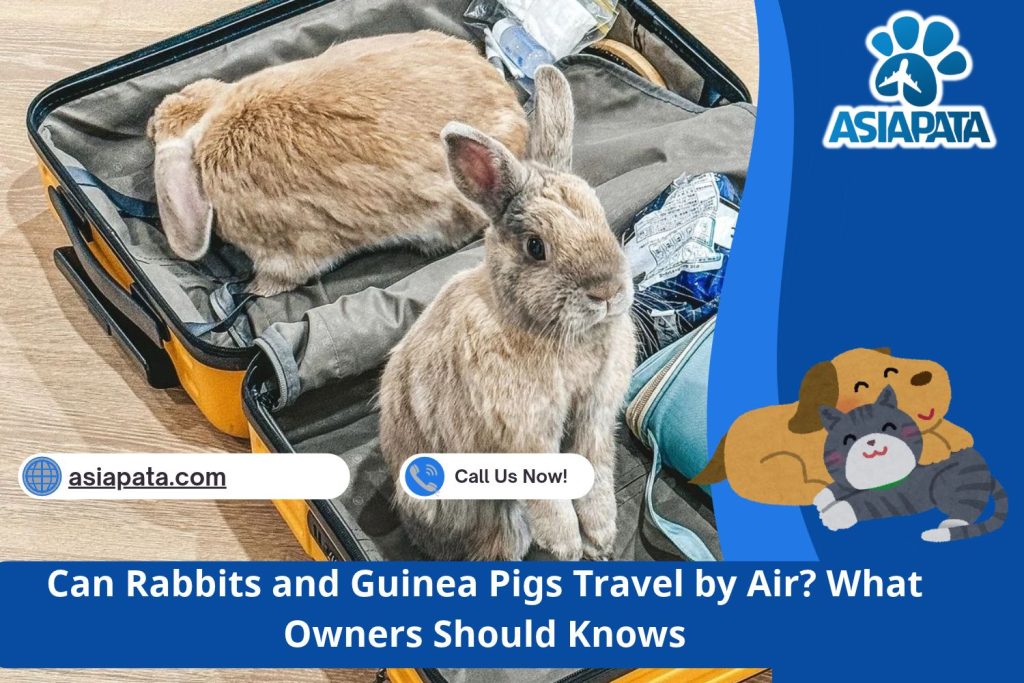
Can Rabbits and Guinea Pigs Travel by Air? What Owners Should Know
Air travel can be a practical option for transporting rabbits and guinea pigs over long distances, especially when their owners are relocating internationally or moving to another country. However, transporting small animals requires careful preparation because they can be sensitive to unfamiliar environments, temperature changes, loud noises, and handling during transit.
Unlike dogs and cats, rabbits and guinea pigs may face different airline restrictions and import requirements. Some airlines accept these animals under specific conditions, while others do not offer transportation for them. Therefore, understanding the regulations, preparing the necessary documents, and choosing an appropriate travel arrangement are essential steps.
In this guide, ASIAPATA explores the main considerations for transporting rabbits and guinea pigs by air, helping pet owners make informed decisions and prioritize animal welfare throughout the journey.
1. Can Rabbits and Guinea Pigs Travel by Air?
Yes, rabbits and guinea pigs can travel by air on certain routes, provided the airline and destination authorities permit their transportation. However, acceptance is not universal, and the rules can vary significantly between airlines and countries.
Depending on the airline’s policy, small animals may be transported in the passenger cabin, through an approved cargo service, or under another designated animal transportation arrangement. Some airlines may accept rabbits but not guinea pigs, while others may impose restrictions on both species.
Before arranging a flight, owners should contact the airline to confirm the following details:
- Whether rabbits or guinea pigs are accepted on the intended route.
- Whether the animals can travel in the cabin or must be transported as cargo.
- The permitted number of animals per passenger or shipment.
- Carrier dimensions, ventilation standards, and other container requirements.
- Restrictions relating to animal age, weight, health, and breed or species.
- Additional fees, booking procedures, and advance notification requirements.
- Rules for connecting flights, transit airports, and changes between carriers.
It is important to receive confirmation before purchasing tickets or making other non-refundable arrangements. A pet accepted by one airline may not be accepted by another airline operating the connecting segment.
Owners should also remember that airline approval does not automatically mean the animal is permitted to enter the destination country. Both transportation and import requirements must be satisfied.
2. Understanding the Travel Needs of Rabbits and Guinea Pigs
Rabbits and guinea pigs are small mammals, but each species has specific behavioral and welfare needs. Understanding these differences can help owners prepare more effectively for air transportation.
2.1. Transporting Rabbits by Air
Rabbits can be sensitive to sudden changes in their surroundings. Unfamiliar smells, loud noises, excessive handling, and prolonged confinement may cause stress during transportation.
A suitable travel carrier should provide enough room for the rabbit to maintain a natural posture, turn around where practical, and lie comfortably. The carrier should also have secure closures, good ventilation, and a stable floor that helps prevent slipping.
Owners should introduce the carrier gradually before departure. Allowing the rabbit to explore it in a familiar environment may help reduce anxiety during the journey.
Food intake is another important consideration. Rabbits have a digestive system that requires regular movement of food through the gastrointestinal tract. A rabbit that stops eating, produces fewer droppings, or appears unusually inactive after travel may have a serious health problem. Veterinary advice should be sought promptly if these signs occur.
2.2. Transporting Guinea Pigs by Air
Guinea pigs may become stressed when exposed to unfamiliar surroundings, sudden movements, loud noises, or changes in routine. Their transportation arrangements should provide a secure environment with suitable bedding, adequate ventilation, and protection from extreme temperatures.
Owners should prepare appropriate food, including hay where suitable, and discuss water provision with the airline or transportation provider. The arrangements should support the animal’s nutritional and hydration needs throughout the journey.
Guinea pigs can also be sensitive to heat. The travel plan should account for waiting periods, airport handling, transfers, and possible delays rather than considering only the time spent on the aircraft.
Before departure, owners should check whether their guinea pigs are eating normally and behaving as usual. Any concerns about appetite, breathing, mobility, or general health should be discussed with a veterinarian.

2.3. Why Species-Specific Planning Matters
Although rabbits and guinea pigs are both small animals, their needs should not be treated as identical. Carrier arrangements, feeding plans, documentation, and country-specific restrictions may differ.
A transportation plan should therefore be based on the species, number of animals, individual health condition, route, and airline requirements. This approach helps reduce avoidable risks and ensures that the arrangements are appropriate for each animal.
3. Checking Airline Regulations Before Booking
One of the most important steps in air transportation is confirming the airline’s current animal policy. Rules can change according to the route, aircraft type, destination, and operational conditions.
Some airlines allow particular small mammals in the cabin, while others only accept approved animals as cargo or do not transport them. Even when a species is accepted, the airline may limit the number of animals permitted on a flight.
Pet owners should ask the airline or its authorized animal transportation representative for written confirmation whenever possible.
The following questions can help clarify the requirements:
- Is the specific species accepted on the selected flight?
- What type of carrier is required?
- Does the carrier need to meet particular ventilation or material standards?
- What are the check-in, handover, and collection procedures?
- Are there special requirements for transit airports?
- What happens if the flight is delayed, diverted, or canceled?
- Are additional veterinary documents or declarations required?
For international journeys, it is especially important to check every flight segment. A route involving multiple airlines can create additional complications if their policies are different.
Planning ahead also gives owners more time to find an appropriate alternative if the preferred airline cannot transport their animals.
4. Preparing the Required Documents for International Travel
International animal transportation often involves more than an airline booking. Depending on the countries involved, owners may need veterinary documents, import authorization, export clearance, or other official records.
Requirements for rabbits and guinea pigs are not necessarily the same as those for dogs and cats. Some destinations impose specific restrictions on rodents and other small mammals, while others may require advance approval or quarantine arrangements.
Common documents and requirements may include the following.
4.1. Veterinary Health Certificate
A veterinary health certificate may be required to confirm that the animal has undergone an examination and meets the relevant health conditions for travel or entry.
The certificate’s format, validity period, and issuing authority depend on the applicable regulations. Some destinations may require endorsement by an official veterinary authority.
Owners should verify the exact requirements before scheduling the examination to avoid obtaining documents that are no longer valid at the time of departure.
4.2. Import Permit and Entry Authorization
Certain countries require an import permit before an animal can enter their territory. The application process may involve submitting information about the species, country of origin, intended arrival date, and transportation arrangements.
In some cases, entry may be restricted or prohibited regardless of the availability of an airline service.
Owners should contact the destination country’s relevant veterinary, agricultural, or biosecurity authority to confirm whether rabbits or guinea pigs can be imported and which procedures must be completed.
4.3. Export and Veterinary Clearance
Depending on the departure country, additional export documentation or official veterinary clearance may be necessary.
These requirements can include document verification, health checks, or other procedures established by the responsible authorities. The process and processing time may vary, so it is advisable to begin checking requirements well before the planned departure date.
4.4. Identification and Ownership Information
Owners may need to provide information identifying the animal and its owner. Depending on the applicable rules, this may include species, identifying characteristics, ownership details, and relevant veterinary records.
Microchip requirements should not be assumed to be identical for all species or destinations. Confirm whether identification is required and which methods are accepted.
4.5. Airline Booking Confirmation
Even when the necessary government documents are available, the animal must still be accepted by the airline under its own transportation rules.
The booking confirmation should clearly identify the approved transportation arrangement. Owners should retain copies of the relevant documents and follow the airline’s instructions for check-in or cargo handover.
5. Choosing a Suitable Travel Carrier
The travel carrier is one of the most important factors in protecting rabbits and guinea pigs during air transportation. It must provide a secure and comfortable environment while meeting the requirements of the airline and the type of service selected.
A carrier that is appropriate for a short car journey may not necessarily be suitable for air travel.
5.1. Size and Internal Space
The carrier should allow the animal to maintain a natural position, sit or lie comfortably, and move as required by the applicable standards.
An excessively small carrier may restrict movement, while an unsuitable oversized carrier may allow the animal to slide around during handling. The correct dimensions depend on the animal’s size and the airline’s rules.
5.2. Ventilation and Temperature Protection
Adequate ventilation is essential throughout transportation. The carrier should allow sufficient airflow while protecting the animal from direct exposure to extreme temperatures and excessive drafts.
Owners should avoid materials or accessories that obstruct ventilation openings. They should also consider the environmental conditions during airport waiting periods, transfers, and collection.
5.3. Secure Doors and Durable Construction
The carrier should be made from suitable, durable materials and have secure doors and fasteners. It must remain closed during handling and prevent the animal from escaping.
Before travel, inspect the carrier for damaged components, sharp edges, loose parts, or gaps that could create a safety risk.
5.4. Bedding, Food, and Water
Appropriate absorbent bedding can help keep the carrier clean and provide a more comfortable surface. Familiar, safe bedding may also help the animal feel more secure.
Food and water arrangements should be planned according to the animal’s needs and the transportation provider’s requirements. Owners should ask how food, water containers, and any necessary replenishment will be managed during the journey.
5.5. Identification Labels
The carrier should display the identification and handling information required by the airline or transportation provider. This may include the owner’s contact details, destination information, and animal-related instructions.
All labels should be accurate, clearly readable, and consistent with the accompanying documents.
6. How to Prepare Rabbits and Guinea Pigs Before Departure
Preparing an animal for air travel should begin well before the departure date. Last-minute arrangements may leave insufficient time for carrier training, veterinary assessment, and document processing.
6.1. Introduce the Carrier Gradually
Place the carrier in a familiar area and allow the animal to explore it under supervision. Suitable bedding or familiar food may encourage the animal to enter voluntarily.
Gradual exposure can help reduce unfamiliarity, although it does not eliminate all travel-related stress. Avoid forcing the animal into the carrier repeatedly if doing so causes distress.
6.2. Maintain Normal Feeding Routines
Keep the animal’s regular feeding routine as consistent as possible before travel. Sudden dietary changes may create additional digestive problems at a time when the animal is already experiencing changes in its environment.
Ask a veterinarian for species-specific feeding advice, particularly if the journey is long or involves extended waiting periods.
6.3. Arrange a Veterinary Examination
A pre-travel examination can help identify health concerns that may affect the animal’s ability to tolerate transportation.
The veterinarian can assess the animal’s general condition and provide advice about feeding, hydration, temperature management, and signs that require attention.
If the animal is unwell, recovering from illness, elderly, pregnant, or particularly sensitive to stress, the suitability of air travel should be evaluated carefully.
6.4. Prepare for Delays
Travel plans should account for unexpected delays, missed connections, and extended airport handling. Owners should confirm what provisions and monitoring arrangements are available if the journey takes longer than expected.
Do not rely solely on the scheduled flight duration when preparing food, water, and other necessary supplies.
6.5. Avoid Unsupervised Medication
Sedatives and other medications should not be used simply to make an animal appear calmer during a flight. Certain medications may affect normal responses to stress or interfere with temperature regulation.
Any medication should be discussed with a veterinarian who understands the animal’s species, health condition, and transportation circumstances.
7. Managing Temperature, Hydration, and Travel Stress
Environmental conditions can change throughout an air journey. Animals may experience airport waiting periods, loading and unloading, aircraft handling, and transfers between facilities.
For rabbits and guinea pigs, temperature management deserves particular attention. Excessive heat can be dangerous, while unsuitable cold conditions and direct drafts may also create welfare concerns.
Owners should ask the airline or transportation provider how environmental conditions are managed during the relevant stages of the journey.
Hydration is equally important. The animal should have an appropriate plan for access to water, taking into account the carrier design, transportation duration, and airline requirements.
Travel stress may appear as unusual behavior, reduced appetite, changes in activity, or reluctance to interact. These signs should be assessed in context, as they can also indicate an underlying health problem.
A well-organized route, suitable carrier, appropriate environmental management, and advance planning can help reduce avoidable stress. However, no transportation method can guarantee that an animal will experience no discomfort.
8. Direct Flights vs. Connecting Flights
When comparing available routes, owners should consider more than ticket prices and scheduled travel times.
A direct flight may reduce the number of transfers, handling stages, and opportunities for delays. For some animals, a simpler itinerary may be preferable when an appropriate direct service is available.
Connecting flights may be necessary when direct routes are unavailable. In these cases, every airline and transit location must be checked for animal acceptance, documentation, and handling requirements.
Before confirming a connecting itinerary, owners should consider:
- Whether the animal can remain under appropriate care during the transfer.
- Whether the connecting airline accepts the species.
- Whether additional transit documents or permits are required.
- Whether the transfer time is sufficient for the approved handling arrangements.
- Whether the transportation provider has procedures for delays or missed connections.
The most suitable route depends on the animal’s welfare, the applicable regulations, and the available transportation services. The shortest itinerary is not automatically the safest option if it involves unsuitable handling arrangements.
9. What Happens When Rabbits and Guinea Pigs Arrive?
Arrival is another important stage of the transportation process. After a long journey, rabbits and guinea pigs need a suitable environment in which to rest and return to their normal routine.
9.1. Prepare a Quiet, Familiar Space
Before the animal arrives, prepare a secure enclosure with suitable bedding, fresh water, appropriate food, and a comfortable resting area.
Where possible, use familiar items that are safe for the animal. Keep the environment quiet and avoid unnecessary handling while the animal settles in.
9.2. Monitor Eating and Drinking
Observe the animal’s appetite, water intake, activity, and droppings after arrival. These indicators can provide useful information about its recovery from the journey.
Rabbits that stop eating or produce significantly fewer droppings require prompt veterinary attention. Guinea pigs that stop eating, become unusually weak, or show signs of illness should also be assessed without delay.
9.3. Complete Arrival Formalities
International arrivals may involve veterinary inspections, document checks, quarantine, or other official procedures. The exact process depends on the destination country’s regulations and the transportation arrangement.
Owners should confirm the collection location, required paperwork, and release procedures before departure. Having these details ready can reduce confusion and unnecessary delays upon arrival.
9.4. Allow Time to Adjust
Avoid introducing too many new experiences immediately after travel. Give the animal time to become familiar with its new surroundings and resume its normal routine.
If unusual behavior persists or the animal displays concerning symptoms, seek veterinary advice rather than assuming that the signs are simply caused by travel stress.
10. Common Mistakes to Avoid When Flying with Small Pets
Even well-intentioned owners can overlook important details when arranging international transportation.
Booking before checking import rules: An airline may accept an animal even when the destination country does not permit its entry under the proposed conditions.
Assuming all airlines follow the same policy: Species acceptance, carrier requirements, and transportation options can differ significantly between carriers.
Preparing documents too late: Some permits and official endorsements require advance processing. Delays can disrupt the entire travel plan.
Choosing an unsuitable carrier: Poor ventilation, insecure doors, inadequate space, or unsuitable bedding can create avoidable welfare risks.
Ignoring transit arrangements: Connecting flights may introduce additional airline rules, documentation requirements, and handling procedures.
Overlooking temperature management: The journey includes airport handling and waiting periods, not just the time spent in the aircraft.
Giving medication without professional advice: Unsupervised sedatives or other medication may create additional health risks.
Avoiding these mistakes starts with early preparation and clear communication with the airline, relevant authorities, and qualified veterinary professionals.
11. Why Professional Pet Transportation Planning Matters
International transportation of rabbits and guinea pigs can involve several parties, including pet owners, veterinarians, airlines, cargo handlers, and government authorities.
Coordinating these requirements can be challenging, particularly when the journey involves multiple countries or connecting flights. Professional transportation planning can help owners understand the sequence of arrangements and identify important requirements before departure.
A suitable service may assist with reviewing the route, coordinating airline arrangements, checking documentation requirements, and explaining the expected transportation process. The scope of assistance depends on the provider and the destination.
At ASIAPATA, careful preparation and attention to animal-specific requirements are important considerations when planning pet transportation. Every case should be assessed individually because rabbits and guinea pigs may face different restrictions from more commonly transported companion animals.
Pet owners should provide accurate information about the animal’s species, number, approximate size, health condition, departure location, destination, and preferred travel date. These details help determine which transportation options may be available.
Professional assistance does not replace veterinary advice or official approval. Airline acceptance and entry permission remain subject to the applicable rules and decisions of the responsible authorities.
Conclusion
Rabbits and guinea pigs can travel by air when the airline, route, and destination regulations allow it. However, transporting these small mammals requires careful attention to their individual needs, health condition, carrier requirements, and travel environment.
Before departure, owners should confirm airline acceptance, review import and export regulations, prepare the necessary documents, and arrange a suitable carrier. They should also consider temperature management, feeding, hydration, transit procedures, and post-arrival care.
Starting the process early can help prevent avoidable complications and provide more time to arrange an appropriate journey. With reliable information, veterinary guidance, and careful coordination, owners can make better-informed decisions when planning international transportation for their rabbits and guinea pigs.
Frequently Asked Questions
Can rabbits travel in the airplane cabin?
Some airlines permit rabbits in the cabin under specific conditions, while others require a different transportation arrangement or do not accept them. Owners should confirm the current policy for the exact flight before booking.
Can guinea pigs travel internationally?
Guinea pigs may be transported internationally when the airline and destination authorities permit it. Entry restrictions, health documentation, and transit requirements should be checked for every country involved.
Do rabbits and guinea pigs need health certificates?
A veterinary health certificate may be required by the airline or destination authorities. The certificate’s format, validity, and endorsement requirements depend on the applicable regulations.
Can rabbits and guinea pigs share the same carrier?
This depends on the animals’ compatibility, welfare needs, carrier design, and airline rules. Separate carriers may be necessary. Owners should obtain veterinary and airline guidance before making this decision.
How early should I prepare for an international flight?
Begin planning as early as possible. Import permits, veterinary examinations, official endorsements, and airline approvals may require advance arrangements. The necessary lead time depends on the destination and the complexity of the journey.
Is air transportation stressful for rabbits and guinea pigs?
Air travel can expose small mammals to unfamiliar sounds, handling, temperature changes, and changes in routine. Appropriate preparation and suitable transportation arrangements can reduce some risks, but individual responses vary. A veterinarian can help determine whether a particular animal is fit to travel.
What should I do if my pet stops eating after the flight?
Reduced appetite can be a warning sign, particularly in rabbits and guinea pigs. Contact a veterinarian promptly if the animal stops eating, produces fewer droppings, becomes unusually inactive, or shows other signs of illness. Do not assume these symptoms are simply normal travel stress.
Xem thêm: Shipping South African Dragons from Overseas to Vietnam: A Complete Guide
Xem thêm: Signs Your Pet Needs to Be Taken to a Veterinarian
Xem thêm: Summer-Ready Backpack or Bag for Small Dogs: Essential Packing Tips
