


Shipping Veterinary Medical Equipment to Vietnam: Procedures, Costs, and Required Documents
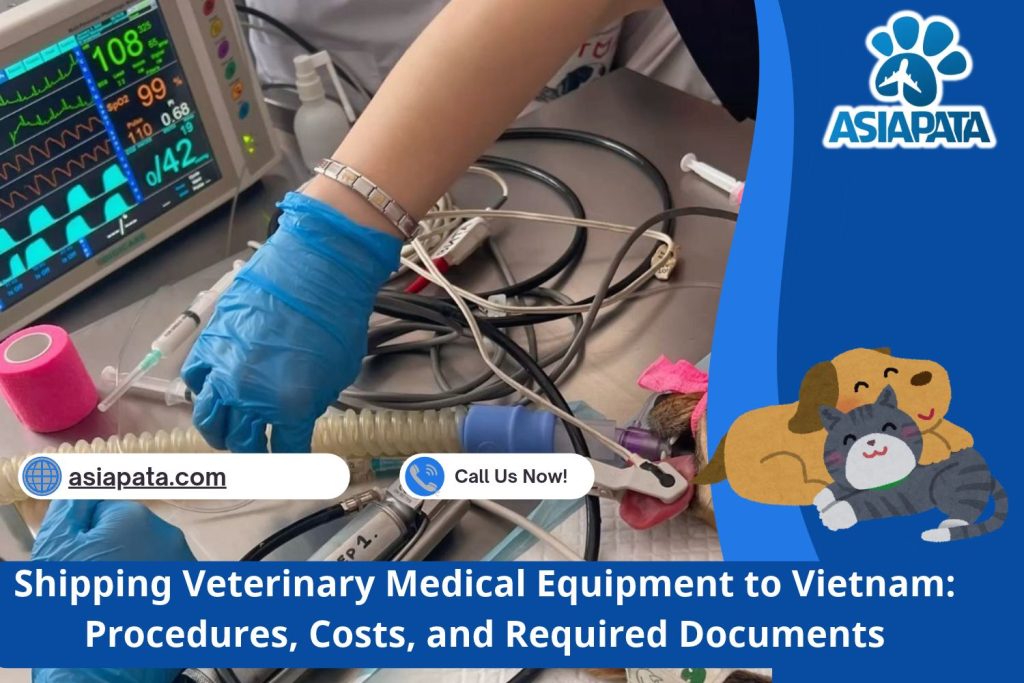
The demand for veterinary medical equipment in Vietnam is increasing as veterinary clinics, animal hospitals, and pet care centers continue to develop. Importing specialized equipment from countries such as China, Japan, South Korea, the United States, and Germany helps local facilities improve diagnostic accuracy and treatment quality. However, shipping veterinary medical equipment to Vietnam requires careful preparation of shipping documents, customs declarations, and relevant import permits, depending on the type of equipment. Choosing a suitable transportation method and understanding the associated costs can help businesses reduce delays and ensure smooth delivery. This article explains the shipping procedures, estimated transit times, cost factors, and important documents required when importing veterinary medical equipment into Vietnam.
1. Growing Demand for Veterinary Medical Equipment in Vietnam
The pet care industry in Vietnam has been growing steadily. More veterinary clinics, animal hospitals, and professional pet care centers are investing in modern equipment to improve their services.
These facilities require specialized equipment for medical examinations, diagnostic imaging, laboratory testing, surgery, and treatment. Common products include veterinary ultrasound machines, X-ray systems, laboratory analyzers, surgical instruments, and patient monitoring devices.
However, transporting veterinary medical equipment internationally requires careful planning. Some products contain sensitive electronic components, while others are large, heavy, or require special packaging. Choosing the right shipping method and preparing the necessary import documents are essential steps in the transportation process.
Professional international shipping services can help businesses transport veterinary equipment from overseas suppliers to Vietnam more efficiently.
2. Types of Veterinary Medical Equipment Commonly Shipped to Vietnam
Veterinary equipment covers a wide range of products. The main categories depend on their intended applications in veterinary clinics, animal hospitals, and pet care facilities.
2.1. Veterinary Diagnostic Imaging Equipment
Diagnostic imaging equipment helps veterinarians examine animals and identify potential health conditions.
Common products include:
- Veterinary ultrasound machines.
- Veterinary X-ray machines.
- Veterinary endoscopes.
- Ultrasound probes and imaging accessories.
- Medical imaging monitors.
- Replacement parts and diagnostic equipment components.
These products often contain sensitive electronic components. Appropriate cushioning, protective packaging, and secure handling are important to reduce the risk of damage during transportation.
2.2. Veterinary Laboratory Testing Equipment
Laboratory equipment is used to analyze blood samples, urine samples, and other materials to support veterinary diagnosis.
Common products include:
- Veterinary hematology analyzers.
- Clinical chemistry analyzers.
- Urine analyzers.
- Laboratory centrifuges.
- Laboratory microscopes.
- Test result readers.
- Sample analysis equipment and laboratory accessories.
Importers should distinguish between equipment and accompanying reagents, chemicals, biological samples, or testing materials. These items may be subject to different transportation and import requirements.
2.3. Veterinary Surgical and Anesthesia Equipment
Veterinary hospitals use specialized equipment to perform surgical procedures and support animal treatment.
Common products include:
- Veterinary anesthesia machines.
- Patient vital sign monitors.
- Surgical suction machines.
- Electrosurgical units.
- Surgical lights.
- Veterinary operating tables.
- Surgical instrument sets.
- Ventilators and respiratory support equipment.
Some products may require additional safety documentation or specific handling arrangements. Importers should verify the product specifications and applicable requirements before shipping.
2.4. Veterinary Monitoring and Treatment Equipment
These devices help veterinarians monitor animal health and provide appropriate treatment.
Common products include:
- Pulse oximeters.
- Heart rate monitoring devices.
- Veterinary thermometers and temperature monitoring equipment.
- Infusion pumps.
- Syringe pumps.
- Veterinary oxygen concentrators.
- Respiratory support devices.
- Replacement components and accessories.
Providing accurate product names, model numbers, and technical specifications helps determine the appropriate shipping arrangements and import requirements.
2.5. Pet Care and Rehabilitation Equipment
In addition to diagnostic and treatment equipment, veterinary clinics and professional pet care centers may import products for daily care and rehabilitation.
Examples include:
- Veterinary examination tables.
- Oxygen chambers for pets.
- Veterinary recovery cages.
- Hydraulic lifting tables.
- Animal rehabilitation equipment.
- Professional pet drying machines.
- Veterinary dental care equipment.
- Animal restraint and handling tools.
Not every pet care product is legally classified as a medical device. Classification depends on the product’s intended purpose, design, and applicable regulations.
3. Which Countries Commonly Supply Veterinary Medical Equipment to Vietnam?
Veterinary medical equipment is manufactured and distributed in many countries. Vietnamese businesses may source products from China, Japan, South Korea, the United States, Germany, and other European countries.
The most suitable sourcing market depends on the equipment category, manufacturer, technical requirements, budget, and after-sales support.
3.1. China
China is an important sourcing market for a wide range of veterinary equipment, general-purpose machines, pet care products, and replacement parts.
Products available from Chinese suppliers may include veterinary ultrasound machines, laboratory analyzers, surgical lights, examination tables, oxygen chambers, care tools, and electronic components.
Importers should carefully review product specifications, quality standards, warranty conditions, and manufacturer documentation before placing an order.
3.2. Japan
Japan is a market worth considering for precision electronic equipment, diagnostic systems, and specialized healthcare technology.
Products that may be sourced from Japanese manufacturers or suppliers include ultrasound systems, diagnostic imaging equipment, laboratory analyzers, microscopes, and specialized components.
For high-value equipment, importers should verify the model number, serial number, operating condition, and availability of replacement parts before arranging transportation.
3.3. South Korea
South Korea is another potential sourcing market for medical electronics, diagnostic imaging systems, and equipment used in veterinary clinics.
Products may include ultrasound machines, health monitoring devices, laboratory equipment, and specialized accessories.
Before purchasing, businesses should confirm the actual country of origin. A product purchased from a supplier in South Korea is not necessarily manufactured there.
3.4. The United States
The United States has manufacturers and distributors offering a variety of medical and veterinary equipment.
Potential products include diagnostic devices, vital sign monitors, surgical instruments, laboratory equipment, and replacement components.
When importing from the United States, buyers should check international warranty coverage, power compatibility, included accessories, and technical support availability in Vietnam. High-value equipment may require reinforced packaging to protect it during long-distance transportation.
3.5. Germany and Other European Countries
Germany, France, Italy, and the Netherlands are potential sourcing markets for specialized medical equipment and veterinary technology.
Products may include laboratory analyzers, diagnostic imaging systems, anesthesia equipment, surgical instruments, and animal health monitoring devices.
For specialized machinery, importers should request product catalogs, technical specifications, and manufacturer information. Reviewing these documents before shipment helps clarify the applicable import requirements.
3.6. Singapore and International Distribution Hubs
Singapore is another potential sourcing and distribution hub for medical equipment, accessories, and replacement components.
Suppliers in Singapore may distribute products manufactured in the United States, Japan, Germany, China, and other countries.
Importers should distinguish between the country of dispatch, the country of origin, and the country of manufacture when preparing shipping and customs documents.
3.7. Important Considerations When Shipping Equipment to Vietnam
Before placing an order, businesses should confirm the product’s country of origin, whether it is new or used, its model number, and its technical specifications.
These details should be consistent with the commercial invoice and other supporting documents.
For high-value or oversized equipment, importers should determine the packaging method, shipping mode, and delivery location in advance. They should also verify the applicable import requirements before dispatch to reduce the risk of storage charges or customs delays.
4. Required Documents for Shipping Veterinary Medical Equipment to Vietnam
The required documents depend on the type of equipment, import purpose, registration status, and applicable Vietnamese regulations.
Businesses should review the documentation before shipment to minimize the risk of customs delays and unexpected costs.
4.1. Commercial and Shipping Documents
Depending on the transaction and shipping method, the documentation may include:
- Commercial Invoice: Identifies the seller, buyer, product description, quantity, unit price, and total value.
- Packing List: Specifies the number of packages, gross and net weight, dimensions, and packaging details.
- Air Waybill (AWB) or Bill of Lading (B/L): The transport document used for air freight or sea freight.
- Sales Contract: Records the terms and conditions of the transaction, where applicable.
- Import Customs Declaration: Submitted in accordance with Vietnamese customs procedures.
- Certificate of Origin (C/O): May be required to support a preferential tariff claim or meet other applicable requirements.
Not every shipment requires every document listed above. The exact documentation depends on the transaction, transport method, and current regulations.
4.2. Specialized Documentation for Medical Devices
For products classified as medical devices under applicable Vietnamese regulations, importers should check the relevant registration, circulation, and import requirements.
Depending on the product and import circumstances, documents may include:
- Vietnamese Medical Device Circulation Number: Required for products that fall within the applicable registration requirements.
- Letter of Authorization: May be needed when an importer acts under authorization from the relevant device owner or registration holder.
- Certificate of Free Sale (CFS): Required when applicable to the relevant procedure or dossier.
- ISO 13485 Certificate: May be relevant to demonstrating the manufacturer’s quality management system, depending on the applicable requirements.
- Product Catalog and Technical Documentation: Describe the intended use, model, specifications, and technical characteristics.
- User Manual and Product Labeling: Prepared in accordance with the requirements applicable to the product and its distribution in Vietnam.
- Import License: Required only for products or circumstances subject to the relevant licensing rules.
This is a reference list, not a universal checklist. Not every document is mandatory for every shipment. Importers should confirm the current requirements for the specific product before shipping.
4.3. Documents for Special Import Purposes
Equipment imported for research, testing, inspection, training, aid programs, or exhibition purposes may be subject to specific procedures.
Depending on the circumstances, additional documents may include:
- An application or request required by the relevant procedure.
- Technical descriptions of the equipment.
- Supporting documents explaining the import purpose.
- Documents relating to aid programs, research projects, or training activities.
- Supporting documents from the relevant testing, inspection, or assessment organization, where applicable.
Businesses should confirm the intended import purpose and the applicable regulations before preparing the final documentation.
4.4. Importing Used or Refurbished Equipment
Used and refurbished equipment requires additional verification before shipment. Importers should not assume that used machinery can be imported under the same conditions as new equipment.
Important details include the equipment’s condition, manufacturing year, model number, intended use, and applicable import regulations.
If the import eligibility is unclear, businesses should consult a qualified customs service provider or the relevant authority before dispatch.
5. Shipping Methods for Veterinary Medical Equipment to Vietnam
5.1. Air Freight
Air freight is suitable for shipments requiring faster transportation, high-value equipment, or urgent replacement parts.
This method can be considered for shipments from China, Japan, South Korea, the United States, and Europe. Actual transit times depend on the route, flight schedule, export and import procedures, and carrier acceptance conditions.
Equipment containing lithium batteries, liquids, or other special components must be declared accurately. Shippers should confirm the carrier’s requirements before booking.
5.2. Sea Freight
Sea freight is suitable for heavy machinery, oversized equipment, or shipments involving large quantities of goods.
Businesses may consider this option when importing veterinary operating tables, clinic equipment, crated machinery, or multiple units in one shipment.
Cargo should be securely fastened and protected against moisture and impact. Electronic components may require additional protective packaging.
6. Shipping Process for Veterinary Medical Equipment
The shipping process generally involves the following steps.
Step 1: Collect Shipment Information
The customer provides the equipment name, model number, quantity, weight, dimensions, country of export, and delivery address in Vietnam.
Step 2: Check Import Requirements
The relevant parties review the product classification, intended use, and applicable specialized documentation requirements before confirming the shipping plan.
Step 3: Recommend a Shipping Method and Provide a Quotation
The shipping method is selected based on the cargo characteristics, required delivery time, and budget. The quotation should clearly identify included charges and potential additional costs.
Step 4: Prepare Documents and Packaging
The customer prepares the commercial invoice, packing list, and other required documents. Equipment is packaged according to its characteristics, with suitable protection for components and accessories.
Step 5: International Transportation
The shipment is collected and transported according to the agreed route. Shipment tracking helps the customer monitor its progress.
Step 6: Complete Import Customs Procedures
When the shipment arrives in Vietnam, the importer completes the applicable customs declaration procedures and provides additional specialized documents when required.
Step 7: Deliver the Shipment in Vietnam
After the required procedures are completed, the cargo is delivered to the recipient. The customer should check the package count, external packaging, and equipment condition upon receipt.
7. Transit Time for Veterinary Medical Equipment
Transit time depends on the origin country, shipping method, route, and status of the import documentation.
- Air freight: Suitable for shipments requiring faster delivery.
- Sea freight: Suitable for heavy, oversized, or high-volume shipments.
- Customs clearance: Depends on the documentation, product classification, and any applicable specialized inspections.
The estimated delivery time should account for more than international transit alone. Cargo collection, document processing, customs clearance, and final delivery may also affect the overall schedule.
8. Factors Affecting Shipping Costs
The cost of shipping veterinary medical equipment to Vietnam depends on several factors:
- Weight and dimensions: Oversized cargo may be charged based on volumetric weight.
- Country of origin or dispatch: The route and distance affect transportation charges.
- Shipping method: Air freight and sea freight have different cost structures.
- Special packaging: Some equipment requires wooden crates, shock-absorbing materials, or moisture protection.
- Import procedures: Taxes, customs-related charges, inspection fees, or specialized compliance costs may apply.
- Cargo characteristics: Batteries, liquids, special components, or oversized dimensions may affect carrier acceptance and handling charges.
To obtain an accurate quotation, customers should provide product catalogs or photographs, package dimensions, weight, pickup location, and delivery address.
9. Important Considerations When Importing Veterinary Equipment
Before arranging shipment, businesses should consider the following points.
Confirm the exact product description and intended use. Avoid describing specialized equipment simply as machinery or pet care products. The description should accurately reflect the actual goods.
Check import eligibility before dispatch. This is particularly important for X-ray machines, diagnostic equipment, laboratory analyzers, and treatment devices.
Ensure document consistency. Product names, model numbers, quantities, and declared values should be consistent across the invoice, packing list, transport documents, and technical documentation.
Use appropriate protective packaging. Screens, sensors, probes, and electronic components should be protected against impact and movement inside the package.
Check warranty conditions and accessories. For high-value equipment, record the serial number, take photographs, and prepare an accessory checklist before shipment.
Verify the requirements for used equipment. Confirm whether the product is eligible for import before handing it over to the shipping provider.
10. Why Choose a Professional Shipping Provider?
Veterinary equipment may include electronic machinery, specialized instruments, and delicate components. These products require appropriate planning from collection through final delivery.
A professional shipping provider may assist with:
- Recommending suitable transportation methods for different equipment types.
- Reviewing shipment information before cargo acceptance.
- Guiding customers on shipping documentation.
- Advising on packaging based on the equipment’s characteristics.
- Tracking shipments and providing status updates.
- Coordinating the handling of transportation issues when they arise.
For veterinary equipment distributors, clinics, and animal hospitals, a well-planned shipping process helps improve import coordination and maintain a more predictable supply of equipment.
11. Conclusion
Shipping veterinary medical equipment to Vietnam is an important consideration for businesses supplying veterinary clinics, animal hospitals, and professional pet care facilities.
Common product categories include ultrasound machines, X-ray systems, laboratory analyzers, surgical equipment, patient monitoring devices, and specialized pet care tools. Each category may have different packaging, documentation, and import requirements.
Businesses should verify the applicable requirements before dispatch. Choosing a suitable shipping method and preparing accurate documentation can help reduce risks, control costs, and support a smoother import process.
Xem thêm: Transporting Pony Horses from Australia to Da Lat for Tourism
Xem thêm: Shipping South African Dragons from Overseas to Vietnam: A Complete Guide
Xem thêm: Signs Your Pet Needs to Be Taken to a Veterinarian
