


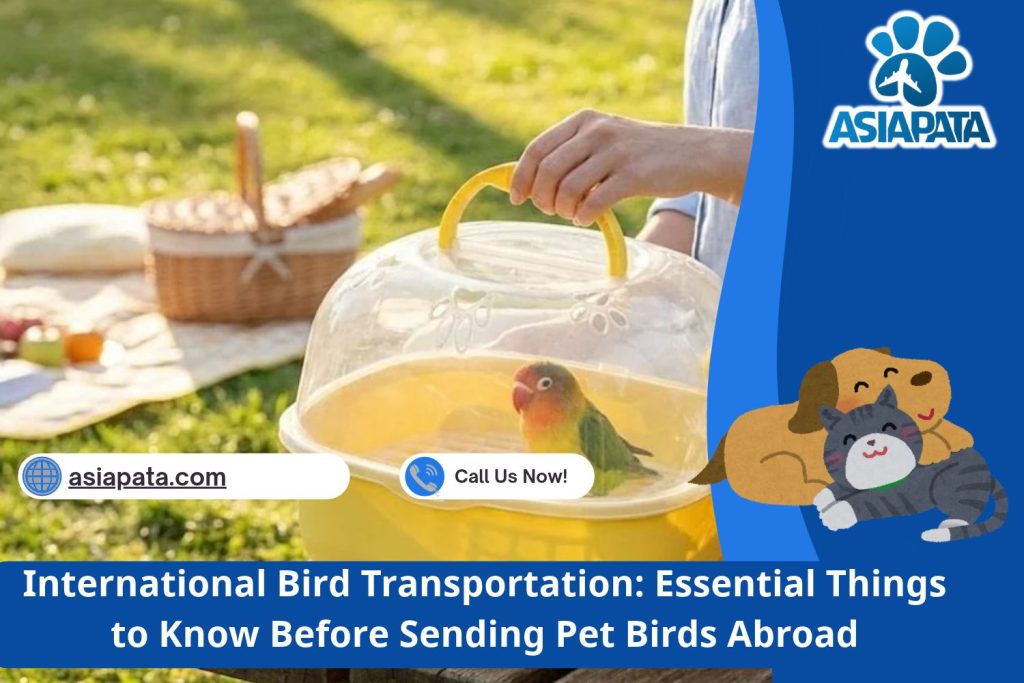
International Bird Transportation: Essential Things to Know Before Sending Pet Birds Abroad
Internationally transporting pet birds requires more than simply booking a flight and preparing a travel cage. Birds are sensitive animals that need special care during transportation. In addition, each country has its own regulations regarding animal imports, veterinary inspections, quarantine, and wildlife protection.
Whether you are relocating with a pet parrot, canary, cockatiel, finch, or another companion bird, understanding the transportation process is essential. Proper preparation helps reduce travel-related stress, prevent documentation problems, and ensure that your bird meets the requirements of the destination country.
This guide explains the most important factors to consider when arranging international bird transportation.

1. Research the Destination Country’s Bird Import Regulations
The first step in transporting a bird overseas is understanding the import regulations of the destination country. These regulations are designed to protect animal health, prevent the spread of infectious diseases, and control the international trade of protected wildlife species.
Different countries may apply different requirements depending on the bird’s species, origin, health status, and intended purpose of importation.
Some destinations may require an import permit before the bird can leave its country of origin. Others may require specific veterinary examinations, laboratory tests, vaccinations, or quarantine arrangements.
Before making travel arrangements, owners should check:
- Whether the destination country allows the importation of the bird species.
- Whether an official import permit is required.
- Whether health examinations or disease testing are mandatory.
- Whether the bird must undergo quarantine upon arrival.
- Whether additional wildlife protection documents are necessary.
- Whether there are restrictions on the number of birds that can be imported.
It is also important to check transit regulations. A bird traveling through another country may be subject to additional requirements, even when it does not leave the airport.
Checking these regulations early helps avoid unexpected complications during transportation.

2. Identify the Bird Species Correctly
Identifying the bird species is an important part of international transportation. Import regulations are not always the same for every type of bird.
Common pet birds include parrots, cockatiels, budgerigars, lovebirds, canaries, finches, and other ornamental birds. However, some species may be subject to stricter import and export controls.
For example, certain parrot species are protected under international wildlife conservation agreements. Their transportation may require additional permits and proof of legal origin.
Owners should prepare accurate information about:
- Common and scientific names of the bird.
- Number of birds being transported.
- Age and sex, when known.
- Country of origin.
- Identification details, such as leg bands or microchips, when applicable.
- Documents demonstrating legal ownership or origin, if required.
Correct species identification allows the relevant authorities and transportation providers to determine which regulations apply to the shipment.
3. Prepare All Necessary Veterinary and Legal Documents
Documentation is one of the most important aspects of international bird transportation. Incomplete paperwork can cause delays, additional inspections, quarantine, or even refusal of entry.
Depending on the countries involved, the following documents may be required:
Veterinary Health Certificate
This document confirms that the bird has undergone a veterinary examination and meets the applicable health requirements. It may need to be issued or endorsed by an authorized veterinary authority.
Import Permit
Some countries require an import permit before a bird can enter their territory. Owners should apply for this document in advance and ensure that the information matches the bird’s identification and travel details.
Export Permit
The country of departure may require an export authorization for certain bird species. The application process and approval period depend on national regulations.
CITES Documentation
The Convention on International Trade in Endangered Species of Wild Fauna and Flora (CITES) regulates international trade in certain protected wildlife species. Birds listed under the convention may require specific permits or certificates, depending on the applicable rules and circumstances.
Proof of Ownership and Origin
Some authorities may request documents showing that the bird was legally acquired or bred. These records can help establish the bird’s origin and ownership history.
Owners should not assume that one document is sufficient for every destination. All requirements should be checked with the relevant veterinary, customs, and wildlife authorities.
4. Arrange a Veterinary Health Examination Before Departure
A bird’s health condition should be carefully evaluated before an international journey. Air transportation can expose birds to unfamiliar environments, noise, temperature changes, handling, and extended periods inside a transport container.
A veterinary examination helps determine whether the bird is suitable for travel and whether additional health procedures are necessary.
During the examination, a veterinarian may assess:
- General physical condition and body weight.
- Breathing and respiratory health.
- Feather condition and visible signs of injury.
- Appetite and normal behavior.
- Signs of infectious or parasitic diseases.
- Any health conditions that may affect the bird during transportation.
Depending on the destination country’s regulations, laboratory testing or other veterinary procedures may also be required.
Owners should schedule the examination according to the validity period specified for the required health documents. Some certificates must be issued within a limited number of days before departure.
If a bird appears weak, has difficulty breathing, refuses food, or shows unusual behavior, veterinary advice should be obtained before proceeding with transportation.
5. Select the Right Transport Cage for Air Travel
Choosing an appropriate transport cage is essential for protecting a bird throughout the journey. The container must be strong enough to withstand handling while providing a safe and comfortable environment.
Airlines and live-animal transportation providers may have specific requirements for bird containers. Therefore, owners should confirm the applicable standards before preparing the cage.
A suitable bird transport container should have:
Adequate Space: The bird should have enough room to stand naturally, turn around, and maintain a comfortable position without excessive movement.
Proper Ventilation: Ventilation openings should allow sufficient airflow while preventing the bird from escaping or becoming exposed to excessive drafts.
Secure Locks: Doors and openings must be firmly secured to reduce the risk of accidental escape during handling.
Stable Flooring: The floor should provide a suitable surface to help the bird maintain balance during transportation.
Safe Materials: The container should be made from durable materials without sharp edges, loose components, or substances that could harm the bird.
Suitable Food and Water Arrangements: Feeding and watering equipment should be prepared according to airline requirements and the expected travel duration.
The container should also be familiarized with the bird before departure whenever possible. Allowing the bird to explore the cage gradually may help reduce anxiety on travel day.
6. Understand Airline Regulations for Live Bird Transportation
Not every airline accepts live birds, and transportation policies may vary considerably between carriers.
Some airlines allow certain small birds to travel under specific cabin conditions, while others only accept live birds through their approved cargo services. Certain species may not be accepted on particular routes.
Before booking, owners should confirm the following information:
- Whether the airline accepts the specific bird species.
- Available transportation options.
- Maximum permitted container dimensions and weight.
- Required container specifications.
- Booking and advance notification procedures.
- Applicable live-animal handling conditions.
- Restrictions related to temperature and flight schedules.
- Special requirements for connecting flights.
It is important to obtain confirmation from the airline before preparing the shipment. A standard passenger ticket does not automatically include permission to transport a live bird.
For international journeys, transportation arrangements should also consider the bird’s welfare throughout the entire route, including airport handling and transit periods.
7. Prepare Food and Water for the Journey
Food and water arrangements are particularly important for birds traveling over long distances. Changes in feeding routines, unfamiliar surroundings, and prolonged transportation may affect their appetite and behavior.
Before departure, owners should understand the airline’s instructions regarding food and water inside the transport container.
Some useful precautions include:
- Maintain the bird’s normal feeding schedule before travel.
- Provide familiar food that the bird regularly eats.
- Avoid introducing unfamiliar food immediately before departure.
- Use suitable feeding containers that can be securely attached.
- Follow professional instructions for providing water during transportation.
- Avoid overfeeding immediately before the journey.
For longer trips, the feeding and hydration plan should be based on the bird’s species, health condition, and travel duration.
Owners should also avoid using unfamiliar supplements or medications without veterinary guidance. Sedatives should not be administered unless specifically recommended by a qualified veterinarian, as they may create additional risks during air transportation.
8. Consider Temperature, Humidity, and Environmental Conditions
Birds are sensitive to changes in their surrounding environment. Excessive heat, cold, humidity fluctuations, and poor ventilation may negatively affect their health during transportation.
Environmental conditions should therefore be considered when selecting a flight schedule and transportation route.
Important factors include:
Temperature: Extreme temperatures may cause discomfort and health problems. Appropriate handling arrangements should be confirmed with the airline.
Humidity: Some bird species are sensitive to dry environments, especially during extended travel periods.
Airflow: Proper ventilation is necessary, but direct exposure to strong airflow should be avoided.
Noise and Movement: Airport environments can be unfamiliar and stressful. Reducing unnecessary handling and sudden disturbances may help the bird remain calmer.
Flight Duration: Longer journeys require more careful planning for food, water, rest, and handling arrangements.
Whenever possible, owners should consider suitable flight schedules and routes that reduce unnecessary waiting time and complicated transit procedures.
9. Understand CITES and Wildlife Protection Requirements
Wildlife protection regulations are especially important when transporting exotic or protected bird species internationally.
CITES is an international agreement that regulates trade in certain endangered and protected wild animals and plants. Several bird species, particularly some parrots and other exotic birds, may be included in its appendices.
Depending on the species and the purpose of transportation, owners may need:
- CITES export permits.
- CITES import permits, where applicable.
- Captive-bred or legal-origin documentation.
- Additional authorization from national wildlife management authorities.
It is important to understand that not every pet bird requires CITES documentation. The requirements depend on the species, its listing, the country involved, and the applicable exemptions.
Owners should verify the bird’s scientific name against the official CITES species database before arranging international transportation.
Transporting protected wildlife without the necessary authorization may lead to serious legal consequences, including confiscation of the animal.
10. Prepare for Customs Clearance and Quarantine Upon Arrival
The transportation process does not end when the aircraft reaches its destination. Birds may need to undergo veterinary inspection, customs clearance, and quarantine procedures before being released to their owners.
The procedures depend on the destination country’s animal import regulations.
Upon arrival, authorities may check:
- The bird’s identity and species.
- Veterinary health certificates.
- Import and export permits.
- CITES documentation, when applicable.
- Compliance with import health requirements.
- The bird’s general physical condition.
Some countries require birds to enter designated quarantine facilities for a specific period. The duration and conditions may depend on disease risks, country of origin, and the bird’s health documentation.
Owners should confirm the following arrangements before departure:
- Approved airport or point of entry.
- Inspection and customs procedures.
- Quarantine location and applicable fees.
- Required documents for animal release.
- Transportation arrangements after clearance.
Preparing these details in advance helps avoid confusion and unnecessary waiting after arrival.
11. Common Challenges When Transporting Birds Internationally
International bird transportation involves several stages, and unexpected problems may occur if preparation is incomplete.
Some common challenges include:
Incomplete Documentation: Missing permits or invalid veterinary certificates can delay clearance and create additional administrative procedures.
Airline Restrictions: Certain airlines may refuse specific bird species or impose special transportation conditions.
Transit Complications: Connecting flights may involve additional regulations, handling procedures, or restrictions.
Health and Stress Issues: Long journeys, unfamiliar surroundings, and environmental changes may affect the bird’s physical condition.
Quarantine Requirements: Unexpected quarantine arrangements may increase transportation time and costs.
Protected Species Regulations: Birds covered by wildlife protection laws may require additional authorization before international travel.
To minimize these challenges, owners should coordinate with the relevant authorities, veterinarians, and airline representatives before confirming the journey.
12. A Practical Checklist Before Sending a Bird Overseas
Preparing a checklist is a useful way to ensure that no important step is overlooked.
Before departure, owners should confirm that:
- The bird species is permitted for import into the destination country.
- Import and export requirements have been checked.
- Necessary veterinary examinations have been completed.
- Health certificates and permits are valid.
- CITES documents have been obtained when required.
- The transport container meets airline specifications.
- The airline has confirmed acceptance of the bird.
- Food and water arrangements are prepared.
- Transit and quarantine requirements are understood.
- Arrival inspection and collection arrangements are confirmed.
Completing these preparations in advance can make the transportation process more organized and reduce the possibility of unexpected difficulties.
13. Why Professional Planning Matters for International Bird Transportation
Transporting birds internationally requires coordination between multiple parties, including pet owners, veterinarians, airlines, customs authorities, and animal quarantine agencies.
Professional planning can help owners understand the applicable regulations, organize the necessary documentation, and select appropriate transportation arrangements.
An experienced transportation provider can also help clarify airline requirements, explain the documentation process, and coordinate important details before departure.
However, acceptance of live birds remains subject to airline policies and approval from the relevant authorities. Each shipment should be evaluated according to its specific species, origin, destination, and travel conditions.
Conclusion
International bird transportation requires careful preparation, accurate documentation, and attention to animal welfare. From checking import regulations and obtaining veterinary certificates to selecting a suitable transport cage and arranging airline services, every step plays an important role in the journey.
Different bird species and destination countries may have different requirements. Therefore, owners should always verify the latest regulations before making transportation arrangements.
With proper planning and professional coordination, international bird transportation can become a more organized and manageable process while prioritizing the bird’s health, safety, and well-being.
ASIAPATA – Supporting Safer International Pet Transportation
Planning to transport your pet bird to another country? Prepare early, understand the destination requirements, and make sure every transportation detail is carefully arranged before departure.
Xem thêm: SHIPPING AUSTRALIAN RED SAND TO VIETNAM FOR AFRICAN SPINY-TAILED LIZARD HABITATS
Xem thêm: Bad Breath in Dogs: Causes and Effective Solutions
Xem thêm: Regulations for Transporting Pets by Air from Germany to Vietnam
